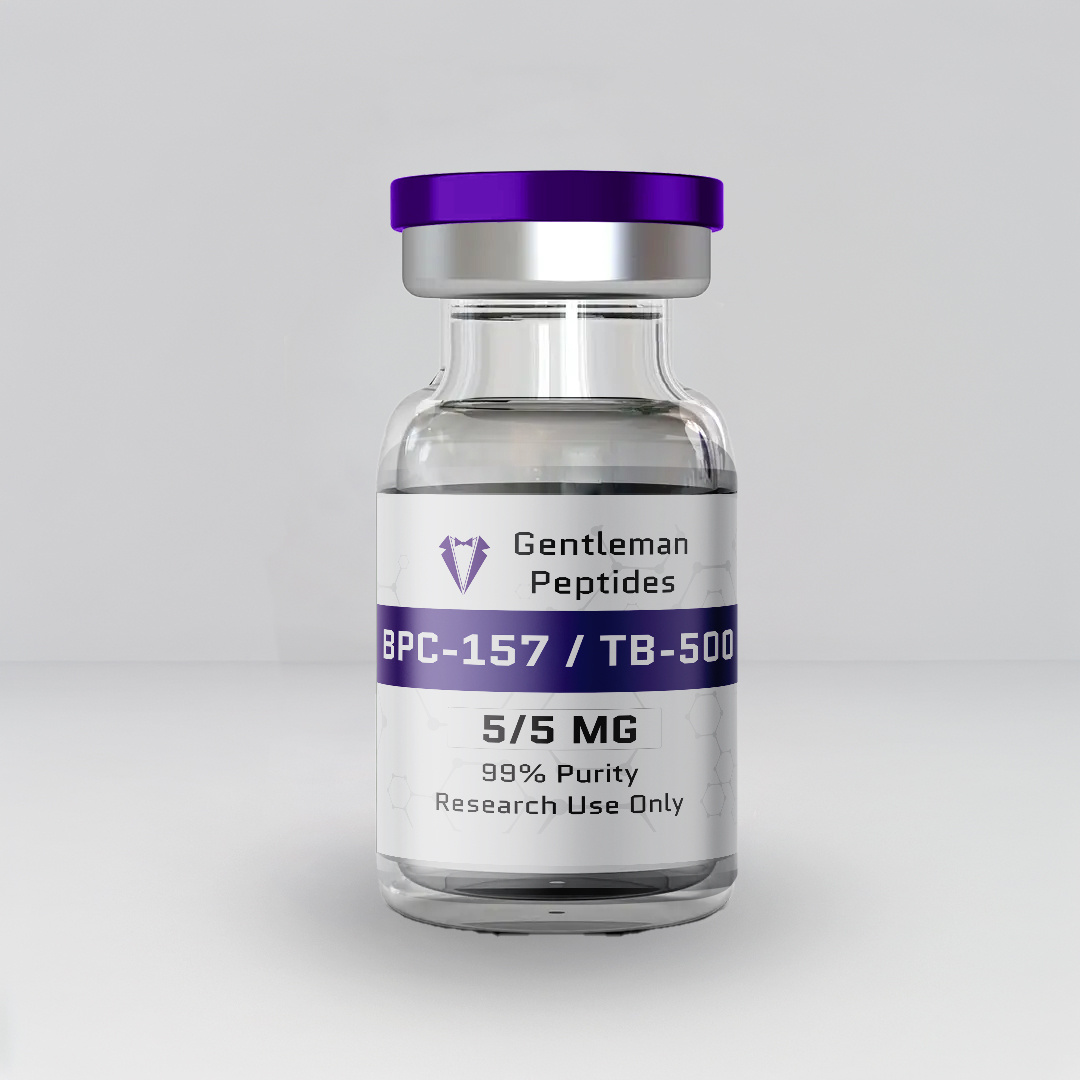
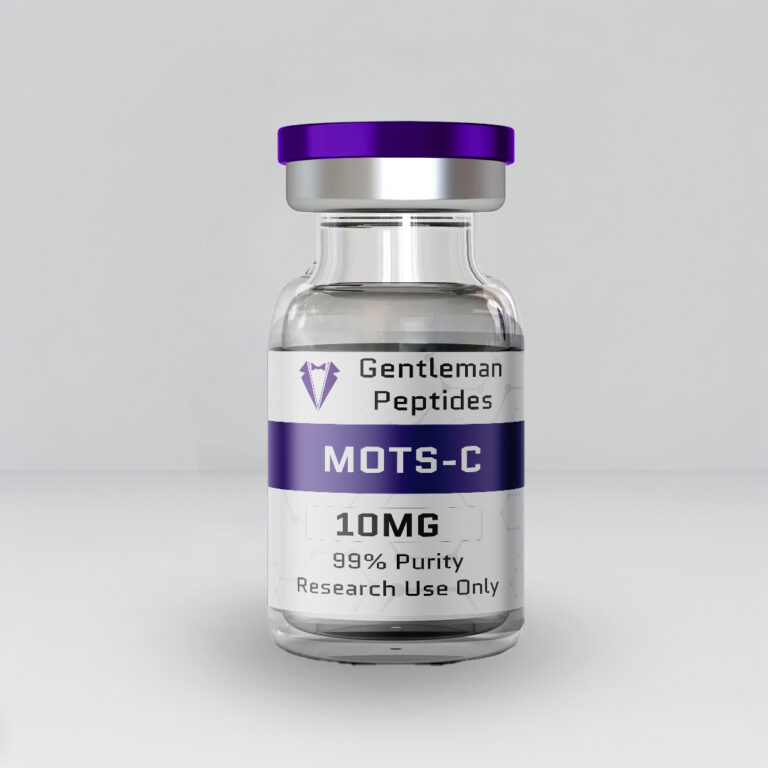
Researchers commonly investigate this combination in laboratory models exploring soft-tissue repair, angiogenic signaling, extracellular-matrix remodeling, and connective-tissue research endpoints.
Why a Combined Reference Material?
Published peer-reviewed work describes BPC-157 and TB-500 as acting through complementary, non-overlapping pathways — BPC-157 is referenced in studies of cytoprotective and angiogenic mechanisms, while TB-500 is referenced for its role in actin polymerization and cell migration. Investigators studying parallel or synergistic mechanisms often request both compounds as a single reference sample for comparative assays, analytical method development, and reference-standard cross-checks.
Compound 1 — BPC-157 (Pentadecapeptide)
- CAS Number: 137525-51-0
- Molecular Formula: C62H98N16O22
- Molecular Weight: 1419.5 g/mol
- Sequence: 15-amino-acid pentadecapeptide (Gly-Glu-Pro-Pro-Pro-Gly-Lys-Pro-Ala-Asp-Asp-Ala-Gly-Leu-Val)
- Research Context: tissue repair, angiogenic signaling, gastrointestinal-protection models
Compound 2 — TB-500 (Thymosin β-4 Fragment)
- CAS Number: 77591-33-4
- Molecular Formula: C212H350N56O78S
- Molecular Weight: 4963.4 g/mol (full-length Tβ4 reference)
- Sequence: synthetic fragment derived from thymosin β-4, an actin-sequestering peptide
- Research Context: cell migration, actin polymerization, vascular and connective-tissue models
Blend Specifications
- Form: Lyophilized
- Endotoxin: <1.0 EU/μg (research-grade specification)
- Purity: Refer to lot-specific Certificate of Analysis (COA)
- Format: Co-formulated lyophilized blend in a single vial
Research Applications
The BPC-157 & TB-500 Blend is used as a reference standard in laboratory research focused on tissue-repair pathways, angiogenic signaling, actin dynamics, and extracellular-matrix studies. Typical study designs include in-vitro receptor-binding and pathway assays, cell-based migration and proliferation assays, comparative analytical method development (HPLC, mass spectrometry), and reference-material cross-validation.
Storage & Handling
Store lyophilized blend at -20°C, protected from light. Reconstituted solution should be stored at 2–8°C and used within the validated stability window. Always handle in accordance with standard laboratory safety practices. Refer to the lot-specific Certificate of Analysis for stability data and recommended handling.
Quality & Documentation
Each lot is supplied with a Certificate of Analysis (COA) referencing identity, purity, and applicable analytical results for both peptides in the blend. The COA is the authoritative source for lot-specific data and supersedes any general product description.
Frequently Asked Questions
What is the BPC-157 & TB-500 Blend? It is a dual-peptide research reference material that combines BPC-157 and TB-500 in a single lyophilized vial, intended for in-vitro laboratory investigation only.
Why are BPC-157 and TB-500 studied together? The two peptides are referenced in parallel literature on tissue-repair pathways. BPC-157 is described in cytoprotective and angiogenic contexts; TB-500 in actin-sequestering and cell-migration contexts. Researchers studying complementary mechanisms commonly request both as a combined reference sample.
Is this product intended for human use? No. This is a research reference material only and is not formulated, labeled, or packaged for human or veterinary use, diagnostic use, food, cosmetic, or therapeutic application.
What documentation is included? A lot-specific Certificate of Analysis (COA) covering identity, purity, and analytical results for both peptides in the blend.
Research Use Only. This product is intended exclusively for in-vitro laboratory and research applications. Not for human or veterinary consumption, diagnostic use, food, cosmetic, or therapeutic purposes. Handling should be performed only by qualified researchers in an appropriate laboratory setting.